Find ergonomic swivel office chair for home, school, and business
Source 30 ergonomic swivel office chair options with varying features like adjustable armrests, lumbar support, and robust frames. Compare specifications, pricing, and customization capabilities from verified Chinese manufacturers to find the right fit for your needs.
Key considerations
Products List




Comprehensive Sourcing Guide
Strategic Sourcing Guide for Ergonomic Swivel Office Chairs
Procuring ergonomic swivel office chairs requires a disciplined approach that balances technical specifications with supply chain reliability. In the global market, these chairs are defined by their ability to support the user through adjustable mechanisms and durable construction. The core keyword "ergonomic swivel office chair" encompasses a wide spectrum of products, from basic task chairs to high-end gaming and executive models. Buyers must navigate a complex landscape where attributes such as customization, material composition, and certification status vary significantly between suppliers. This guide outlines the critical factors for evaluating potential suppliers and products, ensuring that procurement decisions are grounded in verified facts rather than marketing assertions.
Technical Specifications and Functional Attributes
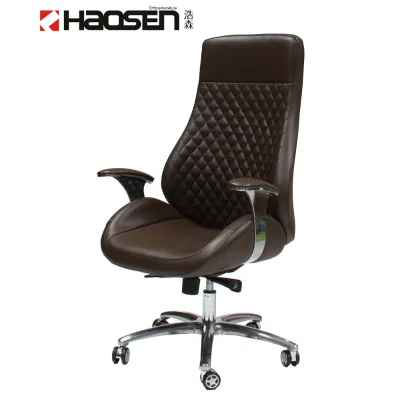
The foundation of a successful procurement strategy lies in understanding the precise technical specifications of the product. For ergonomic swivel office chairs, the mechanism of rotation is a primary differentiator. Market observations indicate that while some units feature a fixed rotary mechanism, the standard expectation for this category is a fully rotary base that allows 360-degree movement. The base material is equally critical; common observations include nylon bases, aluminum options, and five-star base configurations. The castors, or wheels, must be selected based on the flooring environment, with nylon, PA (Polyamide), and PU (Polyurethane) being the most frequently observed materials. PU castors are often preferred for hard floors to prevent scratching, while nylon offers durability in high-traffic areas.
Adjustability is the hallmark of ergonomic design. Buyers should verify the presence of height adjustment features, which are standard in this category. Additionally, the locking mechanism for the seat and backrest is essential for maintaining a specific posture during long work sessions. The frame construction must be robust to support dynamic movement without compromising safety. Observed specifications include frames made from materials like PP (Polypropylene) reinforced with glass fiber, which provide a balance of rigidity and weight. The backrest design can vary, with some models offering optional bow-shaped legs or simple, functional designs. The presence of armrests is another key variable; specific models are observed with nylon 4D armrests, which allow for multi-directional adjustment, while others may have fixed armrests or no armrests at all.
Compliance, Certification, and Safety Standards
When sourcing office furniture, compliance with international safety and quality standards is non-negotiable. The market data indicates that reputable suppliers often provide chairs certified by recognized bodies such as BIFMA (Business and Institutional Furniture Manufacturers Association) and SGS. These certifications serve as third-party validation that the product has undergone rigorous testing for stability, durability, and safety. However, buyers must treat these certifications as observations of specific listings rather than universal guarantees for every product in the category. It is imperative to request current, valid certificates for the specific model being ordered.
Beyond specific certifications, the product standard itself must be clearly defined. While some listings reference general dimensions like 695075cm or 660540720mm, others may cite specific model numbers such as 1808, Odin, or Nolimit. These model identifiers often correlate with specific design standards and load capacities. Buyers should verify if the product meets regional standards, such as EN 1335 for office seating, although this specific standard should be treated as a background reference to be confirmed rather than an automatic attribute. The origin of the product, frequently cited as Hebei, China, or generally China, implies a manufacturing hub known for furniture production, but the specific factory location and its adherence to local and international regulations must be independently verified.
Cost Drivers and Pricing Structures
The pricing of ergonomic swivel office chairs is influenced by a complex interplay of factors, including material costs, customization requirements, and order volume. The observed price range in the market spans from approximately $9.99 to $235 USD. This wide disparity reflects the difference between basic models and those with advanced ergonomic features, premium materials, or extensive customization. A critical cost driver is the Minimum Order Quantity (MOQ). While some suppliers may offer low MOQs, the observed range extends up to 1035 units, with a common benchmark around 100 pieces. Higher MOQs often correlate with lower unit costs, but they also increase the initial capital outlay and inventory risk for the buyer.
Customization is another significant factor affecting the final price. Products that accept OEM (Original Equipment Manufacturer) designs or offer specific color and material choices typically command a premium. The payment terms observed, such as a 30% deposit advance and 70% balance before shipment, are standard in the industry but must be factored into the cash flow planning. Buyers should also consider the packaging costs, as export-standard packing or carton box configurations are standard but can vary in material quality. The "condition" of the product is universally listed as "New," but the packaging integrity is vital to prevent damage during transit, which can indirectly affect the total landed cost if replacements are required.
Typical Applications and Usage Scenarios
Ergonomic swivel office chairs are designed for a variety of professional environments, each with distinct usage requirements. The primary application is in corporate office settings, where employees spend extended periods seated at desks. In these scenarios, the chair must provide consistent lumbar support and allow for frequent posture changes. The observed feature of "with lumbar support" is particularly relevant for these environments to reduce fatigue and prevent musculoskeletal disorders. Additionally, the "modern" and "simple" styles observed in the market cater to contemporary office aesthetics, making them suitable for open-plan workspaces and executive offices alike.
Beyond traditional offices, these chairs are increasingly used in gaming environments and home offices. The "Gaming Chair" classification observed in the market highlights a specific segment where durability and style are paramount. These chairs often feature more aggressive styling and robust frames to withstand intense use. The "folded" or "unfolded" state of the chair is another consideration; most office chairs are designed to remain unfolded during use, but storage capabilities may be relevant for space-constrained environments. The "optional" nature of certain features, such as specific leg shapes or armrest types, allows buyers to tailor the chair to the specific needs of the end-user, whether it is for a high-stress call center or a creative studio.
Supplier Evaluation and Verification Protocols
Evaluating a supplier for ergonomic swivel office chairs requires a multi-faceted approach that goes beyond surface-level product descriptions. The first step is to verify the supplier's ability to deliver on the "Customization" and "Design" attributes. A capable supplier should demonstrate flexibility in accepting OEM designs and customizing products to meet specific branding or functional requirements. The "Accept OEM" attribute suggests a willingness to collaborate, but buyers must assess the supplier's capacity to handle these requests without compromising quality.
The origin of the product, consistently listed as China, particularly Hebei, indicates a specific manufacturing ecosystem. Buyers should verify the specific factory's production capacity and quality control processes. The "Export Standard Packing" and "Carton" or "Carton Box" specifications are standard, but the quality of the packaging materials must be sufficient to protect the chair during international shipping. Furthermore, the "Warranty" and "Guarantee" terms are critical indicators of supplier confidence. While some listings mention a 1-year warranty and others a 5-year guarantee, these terms must be clearly defined in the contract. A supplier offering a longer guarantee period may indicate higher confidence in the product's durability, but the specific terms of coverage must be scrutinized.
Quality Control and Long-Term Procurement Considerations
Ensuring the long-term quality of ergonomic swivel office chairs requires a robust quality control (QC) strategy. The "New" condition of the product is a baseline, but the actual quality is determined by the materials and construction. The "Robust Frame" and "PP+ Glass Fiber" backrest are observed attributes that suggest durability, but these must be validated through sample testing. Buyers should request physical samples to test the "Lockable" mechanisms, the smoothness of the "Rotary" action, and the stability of the "Nylon Castors" or "PU" wheels. The "Height Adjustable" feature should be tested for ease of use and range of motion.
Long-term procurement considerations also include the availability of spare parts and the supplier's after-sales support. The "1 Year" or "5 Years" warranty terms are significant, but the process for claiming these warranties must be clear. Suppliers should have a documented process for handling defects or wear and tear. The "Payment Term" structure, with a deposit and balance, should be balanced with milestone-based payments if the order volume is large. Finally, the "Standard" of the product, whether it is a specific dimension or a model number, should be locked in the purchase order to prevent substitution with inferior versions. Continuous monitoring of the supplier's performance against the observed attributes, such as the "Feature 1: Height Adjustable" or "Feature 2: Lockable," is essential for maintaining a reliable supply chain.
Comparative Analysis of Key Product Attributes
To facilitate decision-making, the following table summarizes the key attributes observed in the market for ergonomic swivel office chairs. This comparison highlights the variability in specifications and helps buyers identify the specific requirements for their procurement needs.
| Attribute Category | Observed Variations | Key Verification Points |
|---|---|---|
| Base Material | Nylon, Aluminum, Five Star Base | Verify load capacity and floor compatibility. |
| Castor Type | Nylon, PA, PU | Ensure suitability for specific flooring types. |
| Armrests | With Armrest, Nylon 4D Armrests, Optional | Check adjustability and comfort for extended use. |
| Backrest Material | PP+ Glass Fiber, Fabric | Assess durability and breathability. |
| Warranty/Guarantee | 1 Year, 5 Years | Clarify coverage scope and claim process. |
| Customization | Available, Accept OEM, Customized | Confirm lead times and minimum order requirements. |
| Origin | Hebei, China; China; Made in China | Verify factory location and export compliance. |
| Packing | Export Standard, Carton, Carton Box | Inspect packaging integrity for shipping safety. |
By systematically analyzing these attributes and cross-referencing them with the specific needs of the organization, buyers can make informed decisions that ensure the procurement of high-quality ergonomic swivel office chairs. The focus must remain on verified facts and observable data, avoiding assumptions about unlisted attributes or unverified claims. This disciplined approach minimizes risk and maximizes the value of the procurement investment.
FAQs
Can I customize the design of the ergonomic swivel office chair?
Yes, customization is available and OEM designs are accepted for this product. Buyers can request specific modifications, but they must meet the minimum order quantity of 100 pieces to proceed with custom production runs.
What certifications do these ergonomic swivel office chairs hold?
The chairs are certified by BIFMA and SGS to ensure safety and durability. These certifications validate the product against international standards, though buyers should verify specific certificates for the exact model ordered.
Which payment terms are required for ordering these chairs?
Standard payment terms require a 30% deposit in advance and a 70% balance before shipment. This structure is typical for the industry and helps secure the production slot while managing cash flow for the buyer.
How long is the warranty period for the ergonomic swivel office chair?
Warranty periods vary between 1 year and 5 years depending on the specific listing. Buyers must clarify the exact guarantee terms in the contract, as coverage scope and claim processes differ significantly between suppliers.
What is the minimum order quantity for these office chairs?
The minimum order quantity is typically 100 pieces, though some listings may vary. Higher order volumes often correlate with lower unit costs, but buyers must account for the initial capital outlay required to meet this threshold.
Where are these ergonomic swivel office chairs manufactured?
Products originate from Hebei, China, or generally China as a manufacturing hub. Buyers should verify the specific factory location and its adherence to local and international regulations to ensure supply chain reliability.
What materials are used for the base and castors of the chair?
Bases are commonly made of nylon or aluminum, while castors come in nylon, PA, or PU materials. The choice of castor material depends on the flooring environment, with PU preferred for hard floors to prevent scratching.